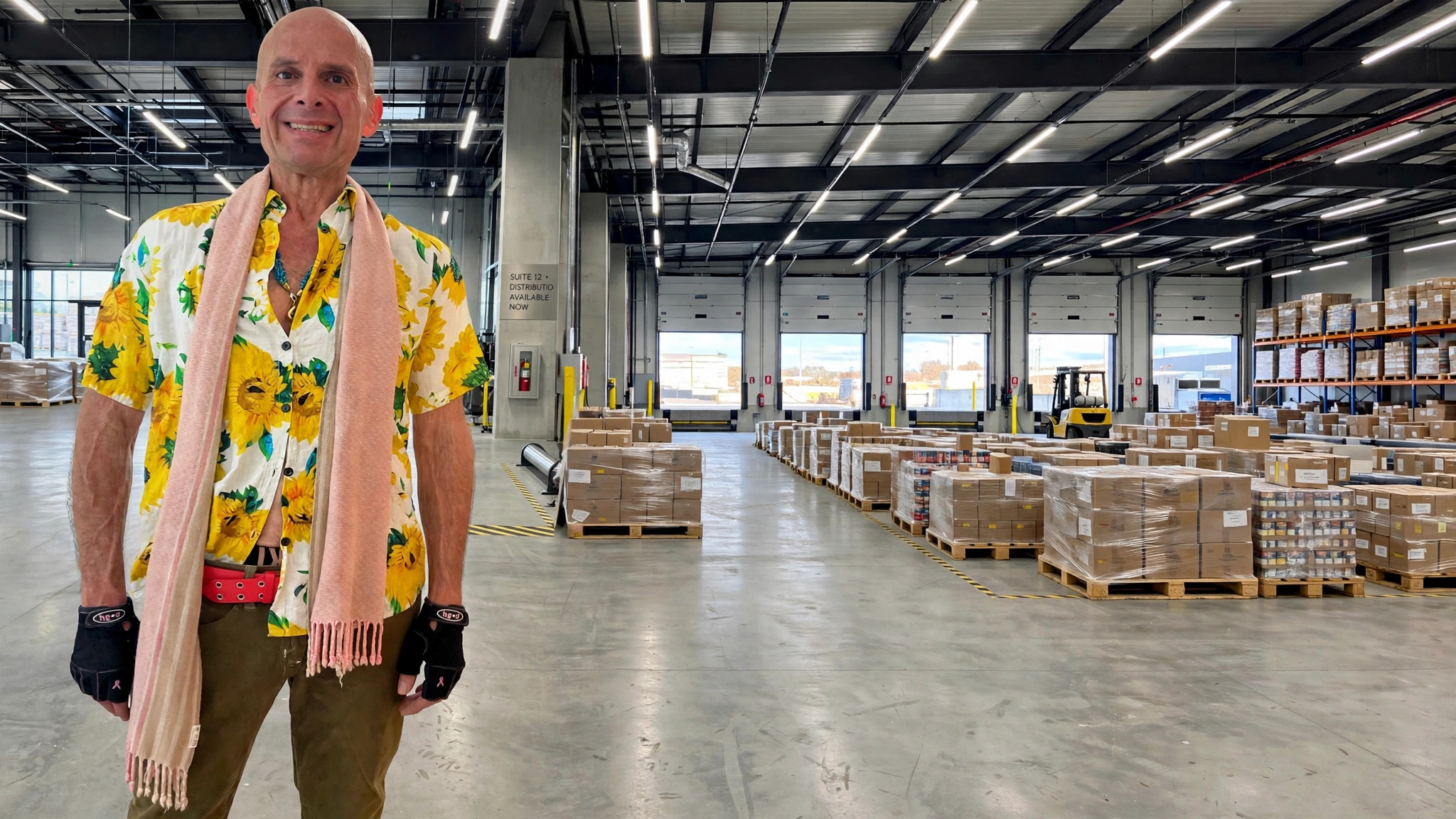
A Foreign-Trade Zone is a place inside the United States that Customs treats as outside the country for duty purposes. Goods can sit in a warehouse in Ontario or Carson, be worked on, repackaged, even manufactured into something else — and no duty is owed until the goods actually leave the zone for the U.S. market. If they are re-exported, no duty is owed at all.
With tariffs where they are today, that is real money. Simon Group Real Estate helps importers, distributors, manufacturers and warehouse owners find and lease space in and around Southern California’s foreign-trade zones — and we work the map of all four zones that cover our region.
The four zones we work
- FTZ 50 — Port of Long Beach. Grantee: the Board of Harbor Commissioners of the Port of Long Beach. Covers all of Orange County and portions of Los Angeles and San Bernardino counties, with predesignated magnet sites across the region.
- FTZ 202 — Port of Los Angeles. Grantee: the Board of Harbor Commissioners of the City of Los Angeles. About 5,400 acres of port property plus more than 35 general-purpose sites across Los Angeles, Orange, San Bernardino and Riverside counties, and subzones in Vernon, Carson and El Segundo.
- FTZ 244 — March Joint Powers Authority. Western Riverside County’s own zone, administered with Riverside County — the entire City of Riverside sits inside it.
- FTZ 153 — City of San Diego. Covers San Diego County and a portion of southern Riverside County, which is how Temecula and Murrieta come in.
What the zone does for the business inside it
- Duty deferral. No duty is paid when the goods arrive — only when they leave the zone for U.S. consumption. A container that sits for six months costs no duty for six months. That is cash flow.
- No duty on re-exports. Goods that come in and ship back out — or are scrapped, wasted or destroyed in the zone — never pay duty at all.
- One weekly entry. Instead of a customs entry (and a merchandise processing fee) on every shipment, zone users file one entry per week. High-volume importers save real fees.
- Inverted tariff. A manufacturer in a zone can often pay duty at the finished product’s rate instead of the higher rate on its imported parts — with the FTZ Board’s production authority.
- No time limit. Goods may be stored in a zone indefinitely — no 5-year bonded-warehouse clock.
- Work happens inside. Storing, exhibiting, assembling, repackaging, relabeling, testing and cleaning are zone activities, done before duty is ever figured.
Where the zones are: 28 cities
Named sites below are zone designations — a site the FTZ Board has approved — not Simon Group listings. Simon Group Real Estate does not operate these sites. What we do is find you space in them, next to them, or get your own building designated.
FTZ 50 — Port of Long Beach
- Long Beach — the zone’s home: the grantee is the Port of Long Beach, headquartered here.
- Ontario — FTZ 50 Site 59, and Magnet Site 2: the California Commerce Center by the airport, 1,844 predesignated acres.
- San Bernardino — Magnet Site 4 at the San Bernardino International Airport: 175 predesignated acres, run by the Inland Valley Development Agency.
- Pomona — two magnet sites: Site 6 on West Mission Boulevard and Site 17 at the Fairplex.
- El Monte — Magnet Site 5 at Pacific Place, on East Valley Boulevard.
- San Gabriel — two magnet sites: Site 7 on San Marino Avenue and Site 18 at Santa Ana and Junipero Serra Streets.
- Santa Ana — Magnet Site 3, in the Inter-City Commuter Station Redevelopment area and the Segerstrom / Fairview warehouse district.
- Anaheim — Site 31 (Panasonic), active in the federal zone list.
- Fontana — Site 23, under FTZ 50 (the city also holds FTZ 202 sites — see below).
- Corona — Subzone 50R operates here (the city is also inside FTZ 244’s area).
- Commerce — Subzone 50M (the city also holds an FTZ 202 site — see below).
- Chino — inside FTZ 50’s service area; boundary changes for Chino companies were processed as recently as February 2026.
- Colton — inside FTZ 50’s service area, and a member city of the agency that runs Magnet Site 4; a specific building is designated through the Port of Long Beach.
- Redlands — FTZ 50 boundary modifications for warehouses here as recently as 2026 (the city also holds FTZ 202 sites — see below).
FTZ 202 — Port of Los Angeles
- San Pedro — the zone’s home ground: the port itself.
- Wilmington — the harbor community beside the port; subzone sites operate here, including refinery and warehouse users.
- Long Beach — general-purpose FTZ 202 sites operate in the city too.
- Carson — an FTZ 202 subzone, plus several general-purpose sites, including the Watson industrial centers.
- El Segundo — Subzone B: Chevron’s facility on El Segundo Boulevard.
- Vernon — a subzone city; the region’s industrial enclave just south of downtown Los Angeles.
- Commerce — Site 66.
- City of Industry — Sites 71, 42 and 48, including a distribution operation of about 1.2 million square feet (Port Logistics Group).
- Pico Rivera — Site 50, just off the 5 and 605 freeways.
- Chino — Site 37, an operating warehouse site of about 550,000 square feet (2015).
- Fontana — Sites 44 and 55, including California Steel Industries’ plant.
- Redlands — Sites 22 and 38.
- Mira Loma / Jurupa Valley — Site 20, in Riverside County.
FTZ 244 — March Joint Powers Authority (Riverside County)
- Riverside — the entire city is inside FTZ 244.
- Corona — inside FTZ 244’s service area (and holds an FTZ 50 subzone — see above).
- Perris — FTZ 244 territory on the I-215 corridor; operating FTZ warehouses here, and new buildings marketed as FTZ-eligible under FTZ 244.
- Menifee — inside FTZ 244’s service area in western Riverside County; a specific building is designated through the March Joint Powers Authority.
FTZ 153 — City of San Diego
- Temecula — designated sites in the city, including Abbott Cardiovascular’s plants (Sites 11, 12 and 13).
- Murrieta — inside FTZ 153’s service area in southwest Riverside County; a specific building is designated through the City of San Diego.
Glendale also sits inside an FTZ service area, as the city itself states — a building there is designated through the grantee.
Magnet sites and usage-driven sites
Two kinds of designated space. A magnet site is predesignated — the zone status is already on the land, so a business skips the designation step and goes straight to Customs activation. The ports’ own materials put the saving at months. A usage-driven site is your own building, designated for your company inside a zone’s service area. Either way, the designation belongs to the zone and its grantee — what we handle is the real estate: finding the right building in the right place, and the lease or purchase that puts you there.
How a building becomes an operating FTZ
- The space. Inside a magnet site, or any building inside a zone’s service area. This is our step — we find space for importers, and lease and sell space for owners.
- Designation. For a building outside a magnet site, the grantee designates it as a usage-driven site — under the Alternative Site Framework this is a boundary modification, a matter of weeks to months, not years.
- Production authority (manufacturers only). Making or assembling product in a zone needs the FTZ Board’s approval for that activity.
- Customs activation. U.S. Customs and Border Protection approves the operator: background checks, a security plan, an FTZ procedures manual, a bond, and an on-site inspection.
- Operate. Goods move in and out under zone procedures, tracked by an inventory control system, with entries filed weekly.
Simon Group Real Estate is a real estate brokerage, not a customs broker. We handle the space and coordinate with the zone’s grantee; your customs broker or FTZ consultant handles the filings. We will tell you plainly which parts are ours and which are theirs.
Who should call
- Importers and distributors holding foreign goods in Southern California warehouses and paying duty up front on every container.
- Manufacturers bringing in components — the inverted-tariff math alone can pay for the move.
- Warehouse owners. Space in or near a magnet site rents to a different pool of tenants — importers who need zone status and cannot get it just anywhere. If you own industrial space in any of the 28 cities above, your building may be worth more than you think.
Questions we hear
Can my building become an FTZ?
If it sits inside a zone’s service area, usually yes — designated as a usage-driven site through the grantee, then activated with Customs. If it sits inside a magnet site, the designation step is already done.
How long does it take?
Months, not weeks. A magnet-site building skips designation and goes straight to activation; a usage-driven designation adds the grantee and FTZ Board step first. Anyone who promises you next month is selling something.
What does it cost?
The grantee charges annual fees — for example, the Port of Long Beach’s published fee runs $7,750 per building per year, plus a manufacturing fee where that applies — and the operator carries its own costs: the inventory system, the bond, and its customs broker or consultant. Against that, one busy importer can save more than the total in merchandise processing fees alone.
I only sell in the United States. Does an FTZ still help?
Yes. Deferral is a cash-flow benefit on every container, the weekly entry cuts processing fees, and duty is never paid on scrap and waste. Exporting is not required.
Are the sites on this page your listings?
No. They are federal zone designations, named so you can see where the zones actually are. Our work is the space — finding it, leasing it, buying it, or getting your building designated.
Tell us the city and the size, and whether you import, distribute or manufacture. We will look at Ontario, Chino, City of Industry, Commerce, San Pedro, San Bernardino, Riverside, Colton, Corona, Wilmington, Long Beach, Carson, El Segundo, Vernon, Fontana, Redlands, Temecula, Menifee, Murrieta, Perris, Pomona, El Monte, San Gabriel, Santa Ana, Anaheim, Santa Fe Springs, Pico Rivera and Glendale with the zone map in hand.
Contact us
Text or Call Thomas or Panjamaporn “Penny” Ampant at Simon Group Real Estate, (909) 248-4804 — or reach us on LINE or WeChat: